
Blog
Weighing up a genuine Gobindo Bhog rice manufacturing factory instead of yet another reseller repackaging mixed stock? Good instinct. This rice carries a Geographical Indication (GI) tag tied specifically to Purba Bardhaman in West Bengal, and the actual manufacturing location behind it matters a lot it’s really the difference between something genuine and something just riding on a familiar name.
Quick answer: A genuine Gobindo Bhog rice manufacturing factory should be able to name the exact area within Purba Bardhaman where their paddy is grown, show FSSAI and GST documentation, and offer a sample before you commit to a bulk order. Can’t get clear answers on all three? Worth treating that as a red flag.
This guide walks through how to spot the best rice mill for Gobindo Bhog rice, what actually drives old Gobindo Bhog rice price, and what to check before ordering from any Gobindo Bhog rice factory whether you’re buying for the kitchen at home or sourcing for a business.
Why the Manufacturing Factory Matters More Than the Packaging
A bag that says “Gobindo Bhog” on the front tells you almost nothing about what’s actually inside it. GI tag enforcement stays inconsistent across online marketplaces and regional distributors, so plenty of listings sell rice under this name without it ever having come near a genuine Gobindo Bhog rice manufacturing factory within the protected region.
Quick answer: The manufacturing factory shapes everything grain consistency, how well it’s been dried, cleaned, graded before it even gets packaged. Buy from someone who can’t confirm their actual milling location, and you’re basically trusting a label, not verified origin.
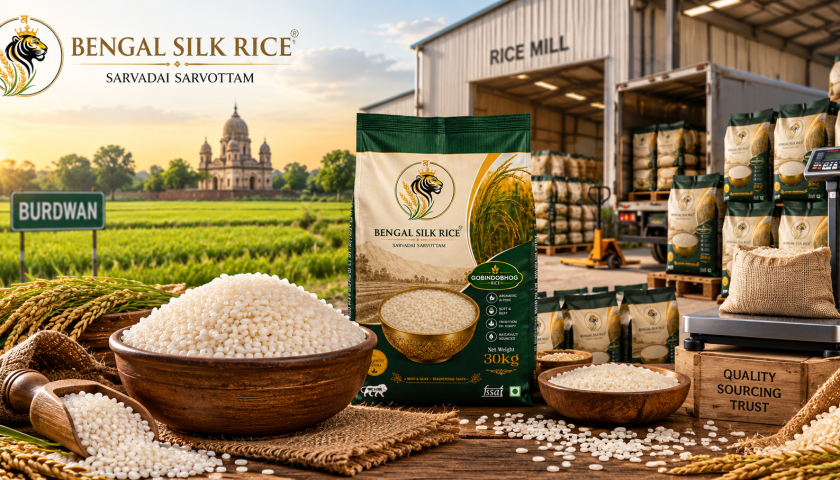
Bengal Silk Rice operates as a genuine Gobindo Bhog rice manufacturing factory right within the Bardhaman belt, so the rice reaching buyers has a traceable path back to the actual fields it grew in not some murky chain of resellers who may never have set foot in the growing region themselves. You can read more about our background on our About Us page.
How to Identify the Best Rice Mill for Gobindo Bhog Rice
Everyone claims to run the best rice mill for Gobindo Bhog rice. The label alone means basically nothing. What actually separates a genuine mill from a trader repackaging mixed stock comes down to a few things you can check directly.
Quick answer: The best rice mill for Gobindo Bhog rice controls the entire process in-house paddy procurement, milling, grading, ageing rather than buying finished rice from unknown sources and slapping their own brand on it.
Ask any mill claiming to be the best rice mill for Gobindo Bhog rice how they actually source their paddy. Do they grow it themselves, or work with contracted farmers inside the GI-protected belt? How long has a specific batch actually aged before it’s sold? A mill that’s confident in its own process won’t hesitate here often they’ll walk you through their milling and ageing timeline in real detail instead of brushing you off with vague reassurances about “quality.” For a deeper look at what this verification process should actually involve, this guide on how to verify an authentic supplier and Gobindo Bhog Rice Mill in Burdwan covers it in more detail.
What Makes a Genuine Gobindo Bhog Rice Factory Different From a Trader
There’s a real gap between a Gobindo Bhog rice factory that actually processes paddy into finished rice, and a trader who just buys and resells whatever’s cheapest that season. This gap matters a lot for consistency a trader’s supply can shift noticeably order to order, depending on wherever they happened to source it from that particular week.
Quick answer: A genuine Gobindo Bhog rice factory controls milling, cleaning, and grading in-house, which means they can actually guarantee consistent quality across repeat orders. A trader reselling stock from multiple unverified sources usually can’t promise the same, no matter how competitive their price looks.
While evaluating a Gobindo Bhog rice factory, just ask them directly do you mill this yourselves, or buy already-milled stock to resell? That one question alone tends to reveal how much real control the seller actually has over the product you’re about to buy.
Understanding Old Gobindo Bhog Rice Price and Why It Runs Higher
Old Gobindo Bhog rice price consistently sits higher than fresh stock, and it’s not arbitrary it reflects real cost the mill’s actually absorbing while holding aged inventory over time.
Quick answer: Old Gobindo Bhog rice price runs higher because ageing takes months, sometimes over a year, and during all that time the mill’s holding inventory without pulling in revenue from it. Aged rice also loses a bit of weight through natural moisture loss, which factors into the final per-kilo cost too.
Rice rested a year or more develops a noticeably stronger aroma and cooks fluffier, with less stickiness exactly why old Gobindo Bhog rice price is worth paying if you specifically want that aged texture for biryani or pulao. Fresh-milled rice costs less, sure, but it carries more moisture and a milder smell, which actually suits softer dishes like khichuri better anyway, where a bit of stickiness is genuinely welcome. For a closer breakdown of what actually moves this number, our Gobindo Bhog Rice Price in Burdwan buyer’s guide covers the specifics.
What to Check Before Ordering From Any Gobindo Bhog Rice Factory
A few checks separate buyers who end up happy from buyers who find problems only after the rice has already shown up at their door.
Confirm the factory’s exact location within Purba Bardhaman don’t settle for a vague “sourced from Bengal” and move on. Ask for FSSAI and GST registration details, and actually check these show up on both the packaging and whatever invoice you get. Request a small sample before committing to anything in bulk, since cooking even a kilogram yourself tells you more than any product description could. And always ask how long the specific batch on offer has actually aged that detail alone shifts both the price and how the rice will actually behave once it’s on the stove.
How to Verify a Genuine Manufacturing Factory From Home
You don’t have to physically travel to Bardhaman to do real verification here. A legitimate Gobindo Bhog rice manufacturing factory should be perfectly comfortable sharing photos or details of their actual milling operation not just polished, packaged product shots meant for a marketing page.
Ask specific questions how does their drying process work, how do they grade rice by size and quality once it’s milled, can they give you batch numbers tracing a specific order back to a particular harvest? A factory with nothing to hide generally answers all of this without much fuss. A reseller passing off mixed stock tends to get vague fast, or just steers the conversation back to price.
Reading the Grain: What Genuine Gobindo Bhog Actually Looks and Smells Like
Documentation’s a good starting point, but the rice itself needs to back up whatever a seller tells you. Real Gobindo Bhog is short, round, pearly white, with a natural sweet aroma that gets noticeably stronger once it’s cooked rather than before.
If the raw rice smells more like perfume than actual food, that’s usually a sign of artificial scenting a trick used on lookalike short-grain varieties trying to pass themselves off as the real thing. A genuine Gobindo Bhog rice manufacturing factory should never need to mask their product’s smell with anything added on afterward.
Why Sourcing Directly From the Factory Saves Money Long-Term
Buying straight from a Gobindo Bhog rice factory instead of through multiple layers of distribution tends to work out considerably cheaper over time, especially for anyone placing regular or bulk orders. Every layer a product passes through before reaching you tacks on its own markup, and those markups add up fast on something already priced at a premium because of its GI status and the ageing process it goes through.
For a household buying every now and then, the savings from going direct might be modest. But for restaurants, caterers, or retailers placing repeat orders, working straight with the best rice mill for Gobindo Bhog rice instead of going through a chain of middlemen adds up to real savings across a year of ordering. If you’re placing a large order, browsing our Gobindobhog Rice 30 KG option is worth a look, since bulk packaging like this tends to bring the per-kilo cost down considerably compared to smaller retail packs.
Common Mistakes Buyers Make When Sourcing This Rice
A handful of mistakes keep tripping up buyers on this one. Trusting the name on a bag without actually verifying the manufacturing factory behind it is the biggest one GI protection exists on paper, sure, but enforcement across sellers is spotty at best. Skipping a sample test before a large order is another mistake, since ordering in bulk purely off photos or a description carries genuine risk if the rice disappoints. And assuming the lowest quoted old Gobindo Bhog rice price is automatically the best deal misses something important genuine ageing and honest sourcing both cost real money, and that’s not the same thing as overpricing.
Choosing the Right Source for Your Gobindo Bhog Rice
Pulling this all together, the difference between a genuine manufacturing factory and a reseller usually comes down to the same handful of signals: traceable origin within the Bardhaman belt, visible batch and packaging documentation, willingness to send a sample, and an honest, specific answer about ageing.
Bengal Silk Rice runs as a genuine Gobindo Bhog rice manufacturing factory within the fertile plains of Bengal, resting the rice properly to build the aroma and texture this variety’s actually known for. Whether you’re comparing options for the best rice mill for Gobindo Bhog rice, checking current old Gobindo Bhog rice price ranges, or just looking to buy straight from a real Gobindo Bhog rice factory instead of a reseller, Bengal Silk Rice can walk you through batch details, ageing timelines, and current pricing before you place an order.
Frequently Asked Questions
1. How do I verify a genuine Gobindo Bhog rice manufacturing factory?
Confirm their exact location within Purba Bardhaman, check for FSSAI and GST documentation on both packaging and invoices, and request a sample before placing a large order. A factory with nothing to hide answers these questions readily.
2. What makes the best rice mill for Gobindo Bhog rice different from a trader?
The best rice mill controls paddy procurement, milling, cleaning, and grading in-house, which guarantees consistent quality across repeat orders a trader reselling stock from multiple sources usually can’t make the same promise.
3. Why does old Gobindo Bhog rice price run higher than freshly milled rice?
Ageing takes months to over a year, during which the mill holds inventory without immediate revenue coming in, and aged rice also loses some weight through moisture reduction both factor into the higher per-kilogram cost.
4. Is it cheaper to buy directly from a Gobindo Bhog rice factory instead of a retailer?
Generally, yes especially for bulk or repeat orders, since each layer of distribution between the factory and the buyer typically adds its own markup on top of an already premium-priced product.
5. How can I check if a Gobindo Bhog rice factory is genuine without visiting in person?
Ask for details or photos of their actual milling operation, their drying and grading process, and batch numbers tracing back to a specific harvest, rather than accepting only finished product photos as proof.