
Blog
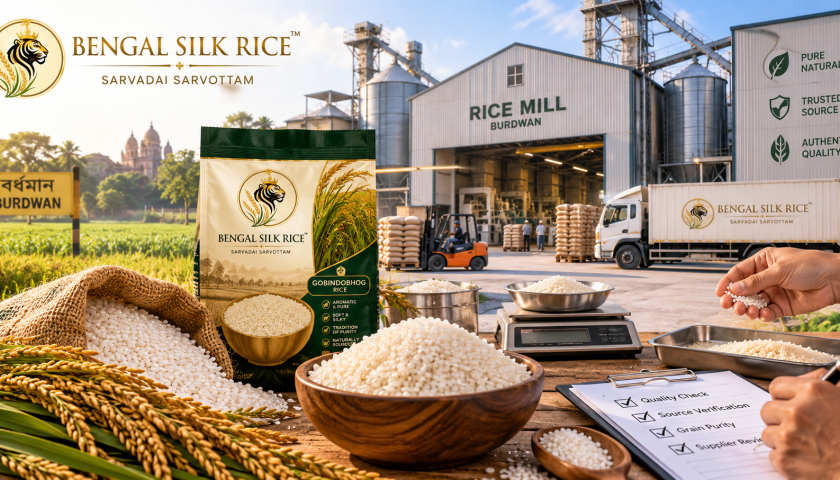
Have you searched for a Gobindo Bhog rice mill in Burdwan? If so, you already know the problem. Many listings are just traders. They resell mixed rice. They are not real mills from the Gobindo Bhog belt.
Here is the short answer. A real mill can trace its rice back to Purba Bardhaman. It shows FSSAI details and a batch number on the pack. It lets you test a sample before you order in bulk. Everything else in this guide builds on that one idea.
This article explains how to spot a genuine Burdwan-based mill. It shows you how to read the grain itself. It covers what changes the price. And it shows where Bengal Silk Rice, a mill working in this belt, fits into the picture.
Why the Mill’s Location in Burdwan Matters
Gobindo Bhog is not just any short-grain rice. It is a rice tied to one place by law. In 2017, it got a GI tag, or Geographical Indication tag. You can read more about this on Wikipedia’s page on Gobindobhog rice. This tag ties the name to one area: Purba Bardhaman, often still called Burdwan.
This one fact should change how you shop. A trader in Kolkata or Delhi can print “Gobindo Bhog” on a bag. But that does not make the rice real. A rice mill in Bardhaman that mills local paddy has a direct link to the source. When you buy from inside this belt, you remove one common risk point: blending.
What a GI Tag Really Means
A GI tag is not the same as a quality mark. Think of it more like a birth certificate. It proves where the rice grew. It does not prove how well it was milled or stored. So you still need to check quality on top of origin. A GI tag alone is not enough.
How to Check a Gobindo Bhog Rice Mill or Supplier
Most guides just say “look for the GI tag.” That is not enough on its own. Use this simple checklist instead.
- Ask exactly where the paddy grows. A real Burdwan mill will name a specific area in Purba Bardhaman. If they only say “somewhere in Bengal,” be careful.
- Check the FSSAI and GST numbers. Look for these on the pack and on the bill. You can learn how India’s food safety system works on the FSSAI official website. If a seller avoids sharing these numbers, do not place a large order.
- Look for a batch number and packing date. A blank label is a warning sign. It often means the rice passed through many unknown hands.
- Ask for a small sample first. One kilogram, cooked at home, tells you more than any online listing. A good mill will send a sample without pushing back.
- Ask how the rice was aged. Good Gobindo Bhog rests for months to build its smell. A seller who explains this clearly usually knows their own product well.
Reading the Grain: Signs of Real Gobindo Bhog
Good paperwork is a start. But the rice itself should match what the seller told you. Here are simple checks you can do at home or in the shop.
Real Gobindo Bhog rice is short, round, and pearly white. It has a natural, sweet smell that grows stronger when cooked. The cooked grain stays soft and a little sticky. It does not turn dry or fall apart. That single answer covers most of what you need to know.
| Check | Genuine Gobindo Bhog | Mixed or Fake Rice |
| Grain shape | Short, round, and even-sized | Long or mixed-sized grains |
| Smell (raw) | Sweet and mild aroma | Flat, unusual, or overly strong smell |
| Colour | Natural creamy white | Too bright, glossy, or glassy appearance |
| Cooked texture | Soft with a slightly sticky texture | Dry, hard, or loose texture |
| Label | Clearly mentions FSSAI details, batch number, and date | Blank, incomplete, or vague labelling |
If the smell feels like perfume, be careful. This often means someone sprayed on a fake scent. This trick is common with lookalike short-grain rice.
Old Rice vs New Rice: Why Ageing Matters
Aged Gobindo Bhog rice has been stored for months, or even a couple of years, after milling. This drying process builds a stronger smell. It also makes the cooked rice fluffier and less sticky. New rice, or freshly milled rice, has more moisture. It clumps more. Its smell is also milder.
For daily meals like khichuri or payesh, this difference is mostly about taste. But for biryani, aged rice usually works better. It holds its shape well. It does not turn mushy. If a Burdwan supplier can tell you how long a batch has rested, that is a good sign. It shows they track their stock with care.
Organic and Unpolished Gobindo Bhog: What These Words Mean
Buyers often search for organic Gobindo Bhog rice or unpolished Gobindo Bhog rice. These sound similar, but they mean different things.
- Organic is about how the rice was grown. It means no man-made pesticides or fertilisers. This claim should come with real certification, not just a label.
- Unpolished is about how the rice was milled. Less of the outer bran layer is removed. The grain looks a bit duller. It also keeps more of its natural nutrients.
A rice can be unpolished but not organic. It can also be organic but still polished. If a seller uses both words together with no explanation, ask them what they actually mean.
What Changes the Gobindo Bhog Rice Price
The Gobindo Bhog rice price can vary a lot. Three things usually explain why:
- Ageing. Rice rested for a year or two often costs more. It has been held as stock for longer, and it loses some weight through moisture loss.
- Pack size and how you buy it. Small retail packs cost more per kilogram. Buying 25 kg or bulk direct from a mill usually costs less.
- Season and paddy supply. Prices often rise just before the next harvest. That is when old stock becomes scarce.
If a price looks far too low for genuine Gobindo Bhog, be cautious. Real paddy from the GI belt costs more to grow and mill than ordinary rice. A price that seems too good is often a sign of mixed rice.
From Mill to Kitchen: What Gobindo Bhog Rice Is Used For
Gobindo Bhog is sticky and fragrant. This makes it perfect for certain dishes, not for everyday cooking in place of regular rice. It is the classic choice for Bengali payesh and khichuri. It also works well in Gobindo Bhog biryani rice recipes, where its mild stickiness helps hold the dish together.
Common Mistakes Buyers Make
- Trusting only the name on the pack. “Gobindo Bhog” printed on a bag does not always mean it is real. GI rules exist, but not every seller follows them.
- Skipping the sample test. Ordering 25 kg or a full ton based on photos alone is risky. Always test a small amount first.
- Assuming cheap means good value. Given how ageing and origin raise the cost, a very low price is a reason to check more, not less.
- Never asking about ageing. Two bags at a similar price can cook very differently. One might be fresh. One might be aged. You should know which is which.
Choosing a Rice Mill in Burdwan or Bardhaman: A Quick Recap
Burdwan and Bardhaman are names for the same district. This is the GI-tagged home of Gobindo Bhog. So a search for either name should lead you to sellers rooted in Purba Bardhaman. Beyond location, a few simple things separate a real mill from a reseller. Clear proof of origin. Visible FSSAI and batch details. A willingness to send a sample. And an honest answer about how the rice was aged.
Bengal Silk Rice works from within this belt. It mills Gobindo Bhog rice from the fertile plains of Bengal. It rests on the rice to build the aroma this variety is known for. Want to see the current range, or ask about a specific batch before you order? Browse Bengal Silk Rice’s product range, or read more about the mill on the about us page.
Real Gobindo Bhog stops being a guessing game once you know what to check. Look at the grain. Check the paperwork. Learn about the mill behind it. Whether you need one kilogram for home or a wholesale order for your business, a few minutes of checking can save you from paying a high price for an ordinary grain. If you have questions about a batch, ageing, or bulk pricing, get in touch with Bengal Silk Rice directly.
Frequently Asked Questions
1.How do I know if a Gobindo Bhog rice mill in Burdwan is real?
Ask exactly where the paddy grows. A real mill will name a specific area in Purba Bardhaman. Then check that FSSAI and GST numbers appear on both the pack and the bill. Also ask for a small sample before you order in bulk.
2.What is the difference between old and new Gobindo Bhog rice?
Aged, or “old,” rice has been stored for months to a couple of years. This dries it slightly and builds a stronger smell. It also cooks fluffier. Fresh, or “new,” rice has more moisture. It tends to clump more, and its smell is milder.
3.Why does Gobindo Bhog rice price change so much between sellers?
The price mainly depends on ageing, pack size, and how you buy it. Aged rice bought in bulk, direct from a mill, usually costs less per kilogram than small retail packs. A very low price often points to mixed or fake stock.
4.Is all Gobindo Bhog rice from Burdwan organic?
No. Organic is about how the paddy was farmed, and it needs real certification. The GI tag only confirms where the rice grew. These are two separate claims. Do not assume one means the other.
5.Can I order Gobindo Bhog rice in bulk directly from a mill?
Yes. Most mills, including Bengal Silk Rice, sell both small packs and bulk or wholesale amounts. It is still wise to test a small sample before you place a large order.
6.Is Gobindo Bhog rice good for biryani?
Yes, especially when it is aged. Its short grain holds together with a light stickiness. This works well for biryani and pulao-style dishes. It still behaves differently from long-grain basmati rice, so cooking times may need small changes.